Wujal Wujal Design Principles
Blaklash worked alongside community to develop a set of Design Principles to guide future housing and infrastructure projects in Wujal Wujal.
Country: Eastern Kuku Yalanji
Role: Principal Consultant
Client: Queensland Government (Department of Housing and Public Works)
Location: Wujal Wujal, Far North Queensland
Collaborators: Wujal Wujal Aboriginal Shire Council, Phorm
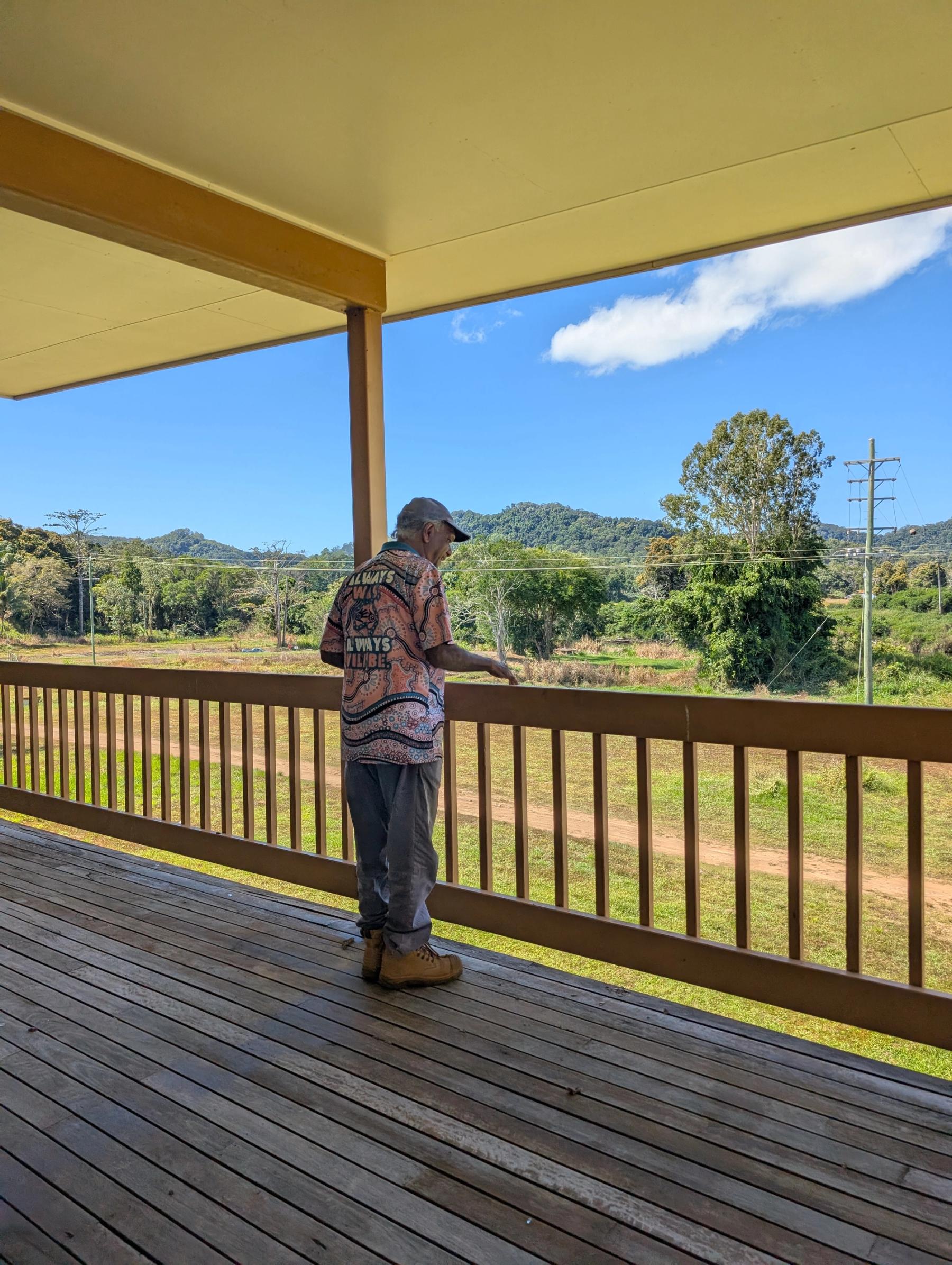
Wujal Wujal, meaning “many falls” in the Kuku Yalanji language, sits in one of Far North Queensland’s most striking landscapes. Framed by lush rainforest and mountains and set along the banks of the Bloomfield River, it’s a place of deep natural beauty.
Home to around 250 people, the community is made up of the Kuku Yalanji Traditional Custodians, alongside Kuku Nyungul and Jalunji clan groups. It’s a close-knit and welcoming town, shaped by strong connections to place and to one another.
Wujal Wujal has a hot, humid tropical climate, with intense wet seasons and cyclonic weather. In 2023, Cyclone Jasper exposed the vulnerability of much of the existing housing stock, with around 60 per cent of homes impacted by severe flooding.
More recently, the heavy rain and flooding associated with ex-Cyclone Koji has again highlighted how quickly these pressures can escalate. These intense weather events will only intensify with climate change, reinforcing the need for housing designed for these conditions.
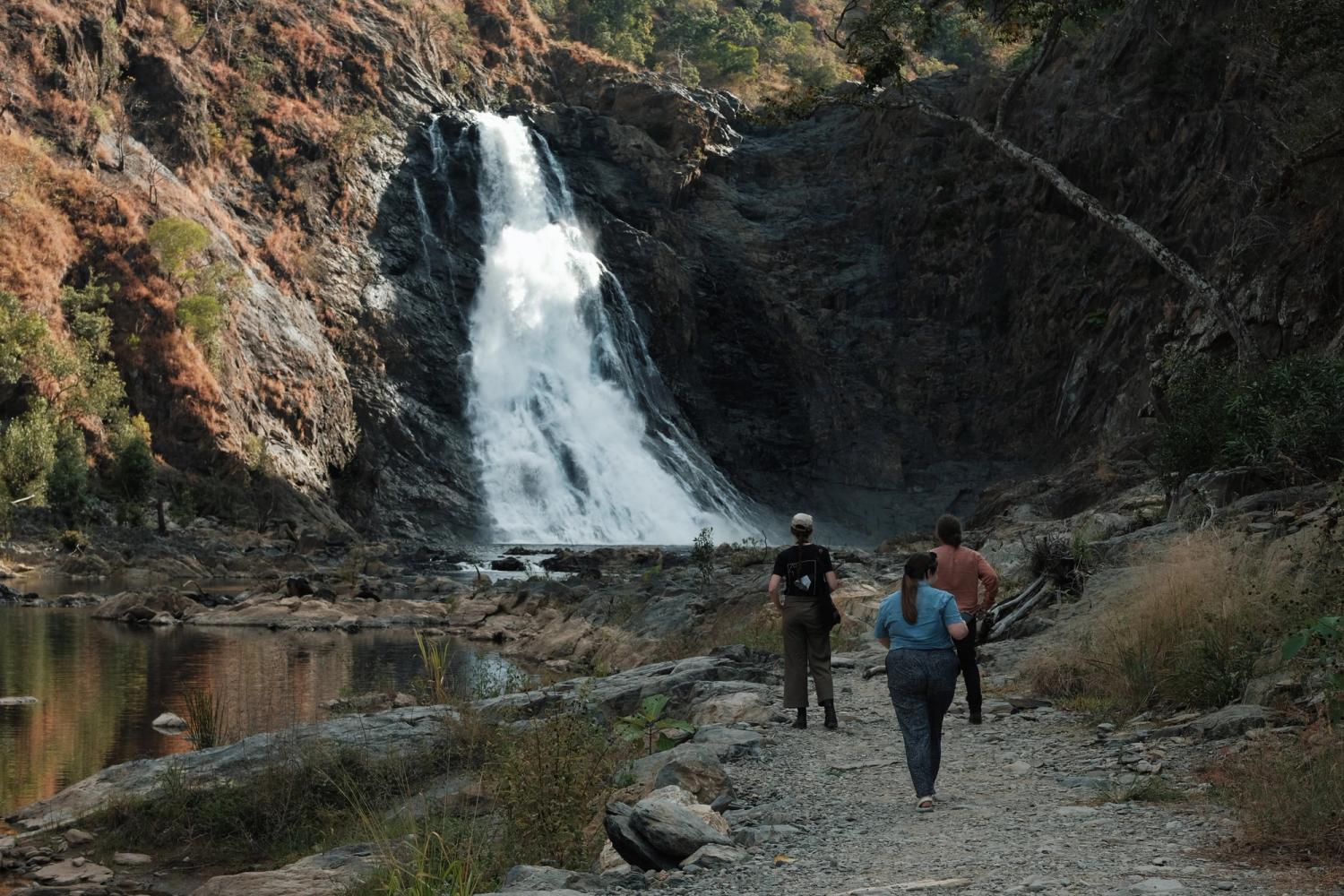
The community’s physical layout and built environment are also shaped by its mission history. Like many Aboriginal communities, Wujal Wujal experienced forced relocation, and it was among the last communities in Queensland to be granted a Deed of Grant in Trust. As a result, housing and planning decisions were imposed from outside the community until well into the late twentieth century, often without regard for how people wanted to live or for the local environment.
The Wujal Wujal Design Principles have been developed to address these challenges directly. Rather than defaulting to generic housing models designed in Brisbane with little regard for local conditions, the project establishes a community-owned framework that captures local knowledge and priorities, translating them into practical, place-specific guidance.
The Design Principles also sit within a broader policy context, including the United Nations Declaration on the Rights of Indigenous Peoples (UNDRIP). UNDRIP affirms the right of Indigenous communities to self-determination, including participation in decisions about land, housing and development priorities, alongside the right to improved housing conditions. This only reinforces the importance of community-led approaches to projects on Country.
The Design Principles are intended to guide briefs and decisions over time, even as project teams change. For the community and Council, this means less time spent revisiting the same conversations on each new project, and greater confidence that cultural knowledge and local priorities will be carried forward consistently.
Design grounded in Country and community🔗
Blaklash is a 100% First Nations-owned and operated multidisciplinary design consultancy creating impact through Country-led architecture and design. We work with communities to translate cultural knowledge into spaces and strategies that strengthen connection between people and Country.
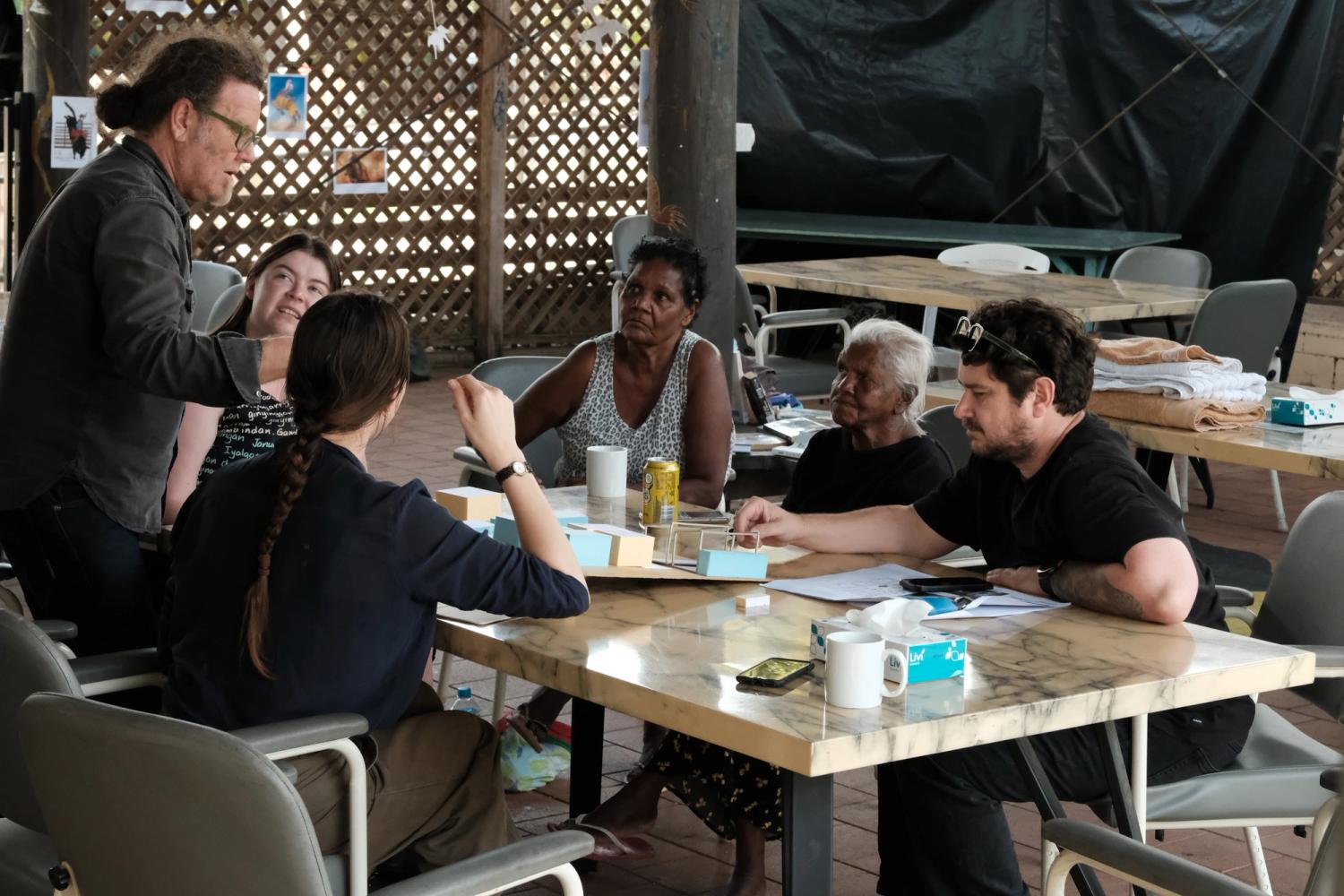
Our practice begins with listening. We work alongside Traditional Custodians and community to ensure culture guides the work from the earliest conversations through to delivery. It’s an approach built on decades of lived experience and long-standing relationships.
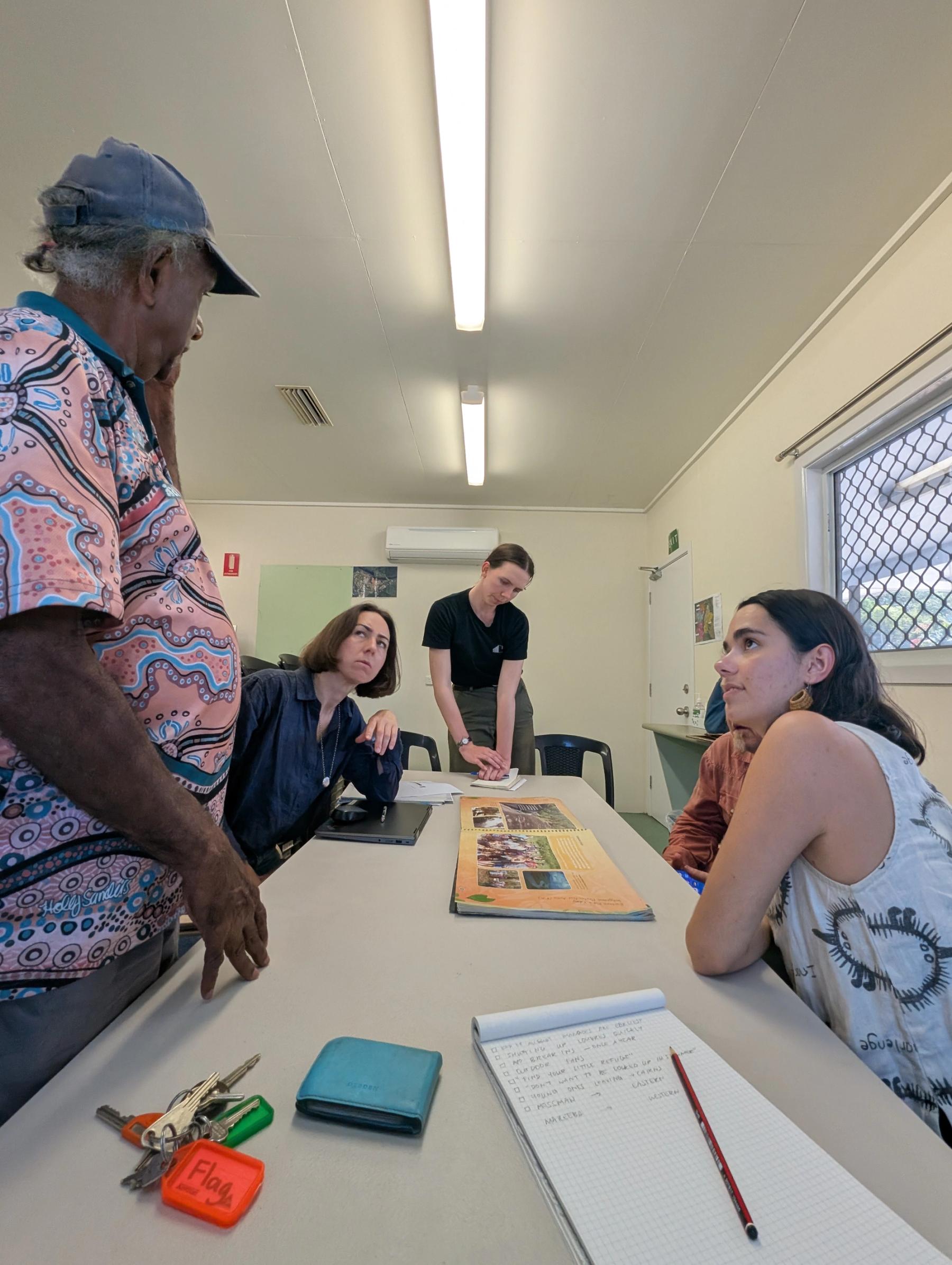
In Wujal Wujal, that meant putting community-led engagement first. The team visited the community over multiple trips, beginning with an open session built around a large community barbecue. During that first visit, we spoke with 37 community members, including many Elders, whose knowledge helped shape the work from the outset.
“We started with engagement, as we always do. This is essential for understanding what people need from their housing and other buildings, and what their current homes aren’t providing.”
A second visit followed, allowing us to test early thinking and sense-check the draft principles with community. This return engagement helped ensure the ideas being developed were genuinely reflective of what had been shared.
Crucially, engagement extended beyond formal meetings and workshops. Residents generously welcomed us into their homes for walkthroughs, sharing their experiences with remarkable openness. These visits revealed how spaces are used day to day; where homes support family life; and where they fall short in supporting health, comfort and kinship.
The Design Principles capture what people want from their buildings and what they want their town to feel like. Working with Phorm Architecture, we translated those ideas into architectural language, so designers can understand what community aspirations actually mean for housing and other buildings in Wujal Wujal.
Principle 1: Designing for health and climate🔗
Wujal Wujal’s hot, humid tropical climate, combined with intense wet seasons and cyclonic weather, places constant pressure on housing performance. In many cases, existing homes rely on construction methods poorly suited to these conditions.
This leads to inadequate ventilation, persistent moisture and widespread mould, regardless of upkeep or maintenance, with direct impacts on health, sleep and comfort.
Through community engagement and house walkthroughs, residents described how homes can become unbearable at night when windows need to be closed for privacy or noise, trapping heat and humidity indoors. In this environment, passive ventilation alone is often insufficient, particularly during extended wet periods.
“A lot of existing houses are concrete block homes on the ground with very little ventilation. In this climate, that combination creates serious mould problems, and, in turn, serious health issues.”
In response, the Design Principles recognise air conditioning as essential health infrastructure in Wujal Wujal. This reflects the reality of a tropical climate where homes must sometimes be sealed for safety during heavy rain and cyclonic conditions, limiting the effectiveness of passive cooling alone.
“Air conditioning isn’t standard at the moment, but we’re advocating for at least one unit per home.”
Rather than prioritising one approach over another, the Design Principles set out a balanced response, combining passive design, weatherproofing and mechanical cooling where needed. By reframing thermal comfort as a health issue, rather than a lifestyle preference, the Principles support better living conditions and reflect the realities of life in a tropical, flood-prone environment.
Principle 2: Planning for kinship🔗
Housing in Wujal Wujal needs to be shaped by kinship. Intergenerational living is common, with extended families often sharing homes and moving between households. At the same time, the ability to rest, particularly for Elders, is critical to health and wellbeing.
Throughout the engagement sessions and house walkthroughs, sleep came up again and again. Noise travels easily through homes, and layouts often fail to provide acoustic separation to accommodate different age groups or sleeping patterns. Elders described disrupted sleep when living near younger or more active households, highlighting how housing allocation and internal layouts can directly affect day-to-day life.
Rather than simply asking for more bedrooms, residents consistently spoke about the need for larger, more flexible sleeping spaces. Bigger bedrooms support co-sleeping, accommodate multiple beds and allow families to adapt spaces as needs change over time.
“They want extended family in the same house, and siblings in the same room. But privacy still matters, so the architecture needs to support both closeness and separation when it’s needed.”
Cultural avoidance practices shape how people move through a home. Multiple circulation paths allow residents to navigate spaces while observing protocols around gender and generational separation. Rigid layouts and dead-end corridors were consistently raised as barriers, pointing to the need for flexibility and choice in how homes are organised.
Outdoor living is also central to life in Wujal Wujal. Much of daily life takes place outside, yet many existing homes restrict this through small or poorly positioned verandahs and layouts that prioritise internal rooms over shaded, functional outdoor areas.
Residents consistently spoke about how outdoor spaces are used, and how often they fall short. Verandahs are too small to gather comfortably, kitchens are disconnected from outdoor areas, and yards are difficult to access or unusable during wet periods. These limitations affect how families come together day to day.
“The tropical lifestyle in Wujal Wujal is incredible, but many houses are shut off. They don’t let people enjoy that outdoor living as much as they want to.”
The Design Principles respond by recognising the central role of kinship in everyday life. Homes are conceived to support extended family living, privacy when it’s needed, and shared space when it’s not, with layouts that allow people to be together without being on top of one another.
Outdoor areas are treated as essential living spaces rather than secondary additions. Verandahs, shaded outdoor rooms and cooking areas are integrated closely with kitchens and internal living areas, allowing daily life to move easily between inside and out. This approach reflects how people gather, cook, rest and move between households across the community.
Principle 3: Community-led opportunities🔗
The Design Principles recognise housing and infrastructure projects as opportunities to support people in Wujal Wujal by building skills, creating work and contributing to the long-term strength of the community.
Throughout engagement, community members spoke about the importance of projects creating real opportunities to stay and build a life in Wujal Wujal. People talked about learning new skills, earning income locally and being able to remain on Country, with Elders and young people alike emphasising the value of training and employment that lasts beyond a single construction phase.
“It’s important that people can build a life in Wujal Wujal, rather than having to leave for Cooktown, Cairns or Brisbane.”
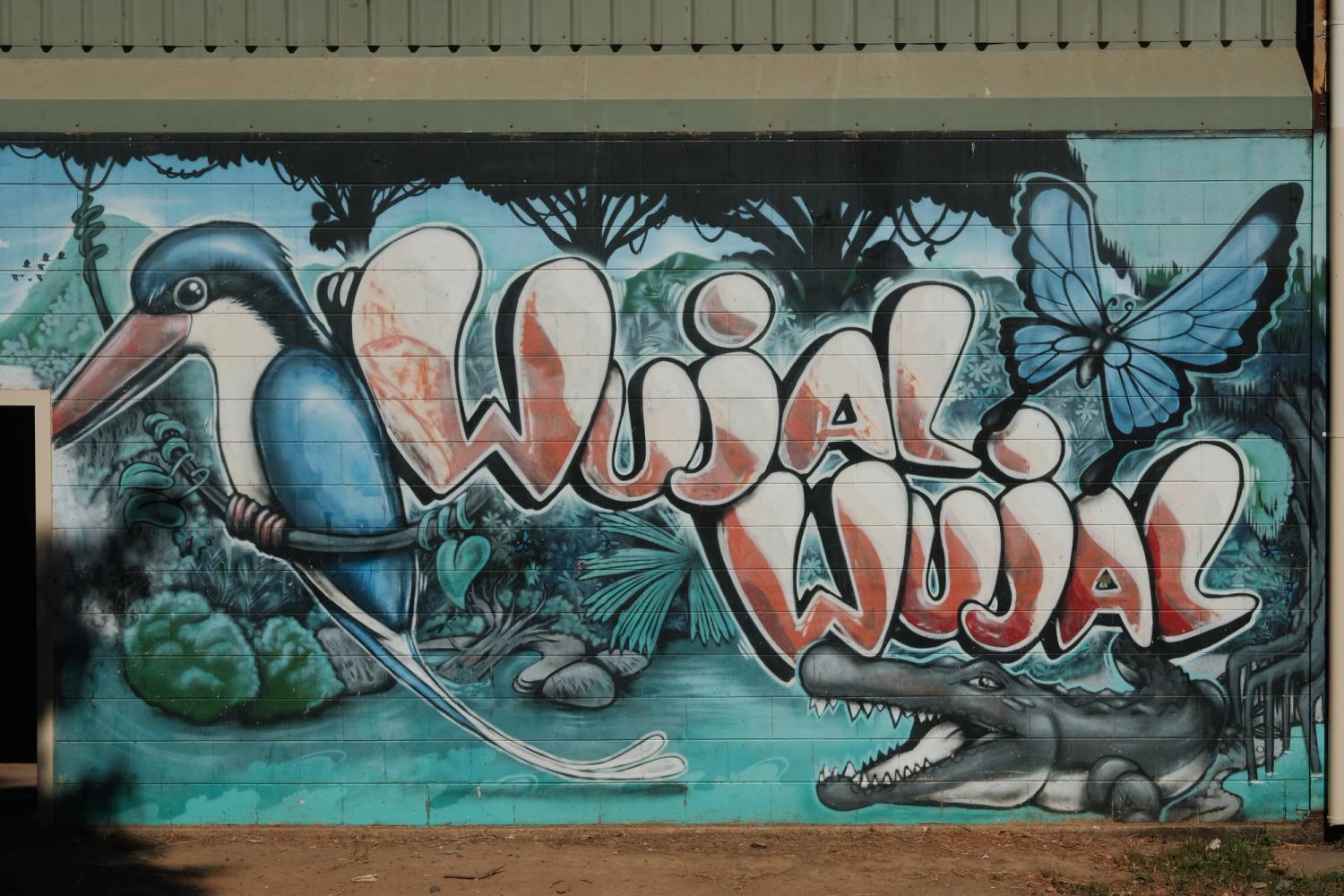
Beyond the delivery of housing, the Design Principles frame development as an opportunity to strengthen the community. They emphasise the importance of involving local people wherever possible, alongside partnerships with First Nations-owned businesses, artists and suppliers.
Importantly, these opportunities are framed as ongoing commitments rather than one-off gestures. The Design Principles encourage approaches that support skills development and knowledge sharing over time, helping to build capacity within the community.
By embedding opportunity into the way projects are planned and delivered, the Design Principles reinforce self-determination in practice, ensuring investment in housing also supports economic participation and the long-term strength of the community.
Principle 4: Resilience, safety and longevity🔗
Wujal Wujal’s environment places ongoing demands on housing and infrastructure. Flooding, cyclones and prolonged wet seasons affect how buildings perform over time, while everyday safety considerations shape how people move through and use their homes.
Residents spoke about the impacts of flooding and water movement around homes, from erosion and debris to materials that can’t tolerate repeated wetting and drying. These impacts were felt acutely during Cyclone Jasper in 2023 and, more recently, through the heavy rain associated with ex-Cyclone Koji.
Animal safety also emerged as a practical concern. “Community in Wujal Wujal love their dogs, but fencing is often inadequate, so dogs roam, fight or cause safety issues. People want that to be managed better.”
Fencing often fails during floods or creates hazards by trapping debris. Proximity to waterways raises additional considerations around crocodiles, while snakes are a known presence around residential areas. Together, these realities point to the need for design responses that extend beyond the building itself.
In response, the Design Principles focus on durability, recovery and long-term performance. Design decisions are guided by the expectation that flooding and extreme weather will occur, prioritising approaches that allow homes to recover without requiring full replacement after each event.
At a broader scale, the Principles also consider how homes sit within the landscape. Site planning is intended to work with water movement rather than against it, helping floodwaters pass through safely while reducing debris buildup and associated risks.
For us, durability is inseparable from responsibility. These buildings need to last 25, 50 years, not just five.
A practical, enduring framework🔗
The Wujal Wujal Design Principles are a working document, created to guide real projects over time. Owned by Wujal Wujal Aboriginal Shire Council, they’re intended to be embedded into future briefs, tenders and assessment processes, providing continuity regardless of which consultants or contractors are engaged.
“Even if future designers aren’t working with us, the engagement and priorities are all captured here in this document. Council can use the principles almost as assessment criteria.”
By serving as a standing reference, the document reduces the need for the community to repeatedly explain its priorities on every new project. It helps protect community intent over time, lightening the cultural load on Elders, Councillors and residents by capturing shared knowledge in one place.
Each principle is supported by Elder quotes, diagrams, annotated plans and precedents, to show how the guidance can be applied in practice. Rather than prescribing a single solution, the Design Principles set performance expectations that allow designers to respond creatively while remaining accountable to community priorities.
They also support government agencies and delivery partners to justify departures from standard housing models where those models fail to respond to the realities of Wujal Wujal.
The team would like to sincerely thank the architects and designers behind the case study projects featured throughout the Design Principles, including Troppo Architects, Phorm Architecture and Design, Iredale Pederson Hook Architects and OFFICE. Their generosity in sharing their imagery and insights has helped demonstrate how community-led design can respond meaningfully to place.
Importantly, the Design Principles are not static. They encourage ongoing learning by creating feedback loops to capture how buildings perform once occupied, using lived experience to inform future projects and create a cycle of continuous improvement.
While deeply specific to place, the Wujal Wujal Design Principles demonstrate an approach to community-led design that extends beyond a single project or location. They show how self-determination can be put into practice, translating policy commitments into grounded, place-based outcomes shaped by community knowledge.
“There’s a lot of talk about self-determination in policy. This is what that looks like at a local level, responding to a community’s specific needs, in their specific place.”
This project is proudly supported and funded by the Queensland Government.